


From Myth to Truth: Decoding Gen Z’s Decision Framework
Based on Intage’s BrandSense 2026 study
(3,000 respondents | 60+ brands | 10 categories), one thing is clear:
Gen Z is not simply changing their minds more easily.
They are becoming more selective in how they choose.
They do not follow trends blindly. They filter before they trust.
The brands that win Gen Z’s hearts are not the ones that speak the loudest,
but the ones that understand how Gen Z thinks.
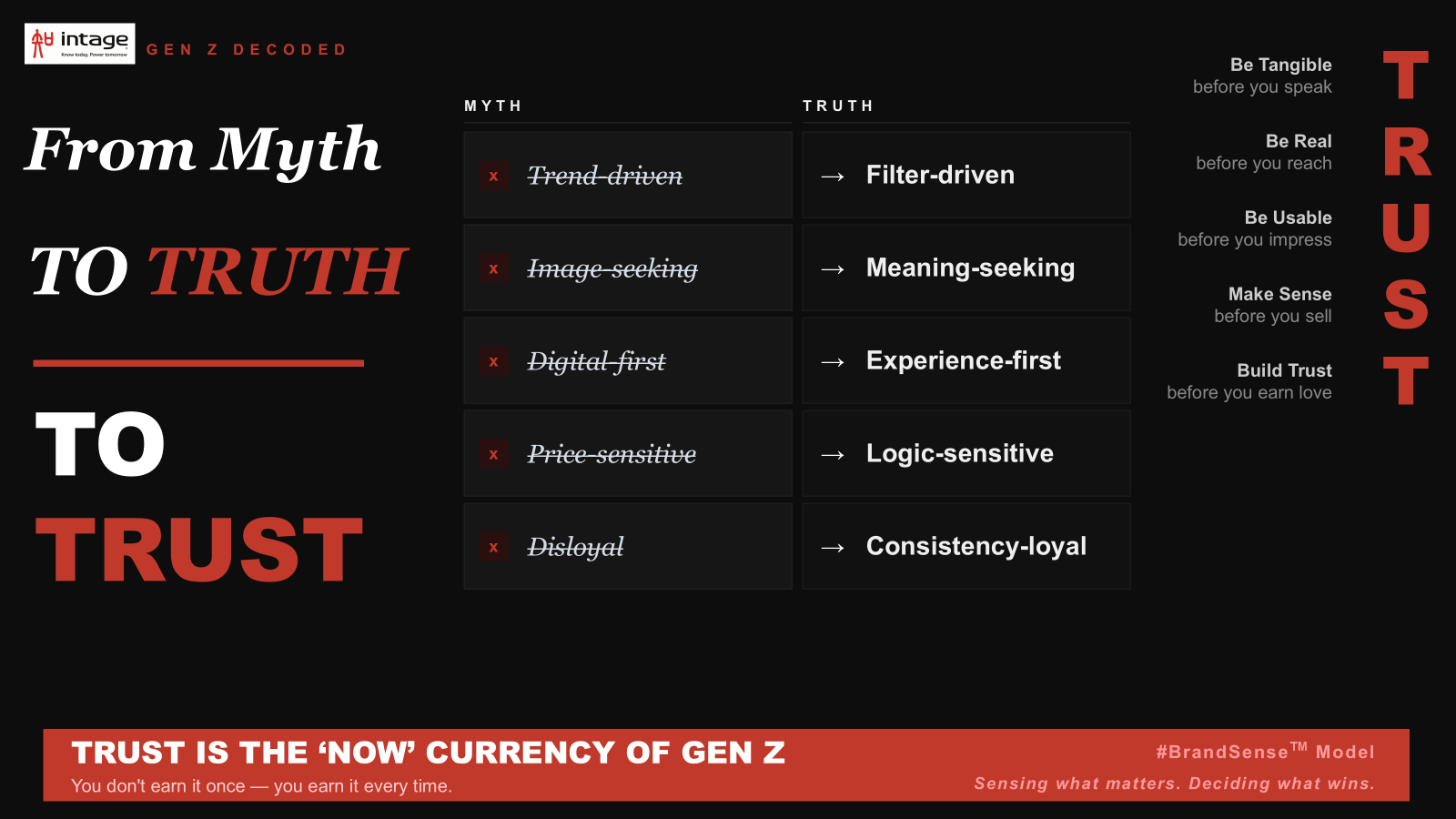
From Myth to Truth: Gen Z is not what we think
#Truth1: From Trend-driven → to Filter-driven
#Truth2: From Image-driven → to Meaning-driven
#Truth3: From Digital-first → to Experience-first
#Truth4: From Price-driven → to Value-driven
#Truth5: From Disloyal → to Consistency-loyal
TRUST Framework: Gen Z’s Decision System
T = Tangible — Be Tangible Before You Tell Story
Gen Z does not automatically believe what brands say.
They are more likely to trust what real people actually use.
They check social proof and compare information across platforms.
Implication: Brands must prove, not just proclaim.
Say less, show more, and let real users speak through real experience.
R = Real — Be Real Before You Reach
Gen Z is not trying to look good for others. They want to be true to themselves.
Implication: Brands need to answer one essential question:
“What do we genuinely mean in their lives?”
U = UX/ Usability — Be Usable Before You Impress
Gen Z does not separate online from offline.
What matters is whether the experience is easy, fast, and seamless.
Implication: UX is not just a feature. It is a growth driver.
The easier the experience, the more likely the brand is to be chosen.
S = Sense — Make Sense Before You Sell
Gen Z is not asking, “Is it cheap?” They are asking, “Is it worth it?”
Implication: Do not compete by lowering the price.
Compete by increasing the reason to pay.
They are not afraid of spending, but they are wary of spending without value.
T = Trust — Build Trust Before You Earn Love
Gen Z is not inherently disloyal.
They simply do not give loyalty away easily.
Implication: Brand experiences must be repeatably good.
One good experience is not enough.
Loyalty = Consistency x Time